Federal civil filings show a clean before-and-after on AI
and it's only going to continue
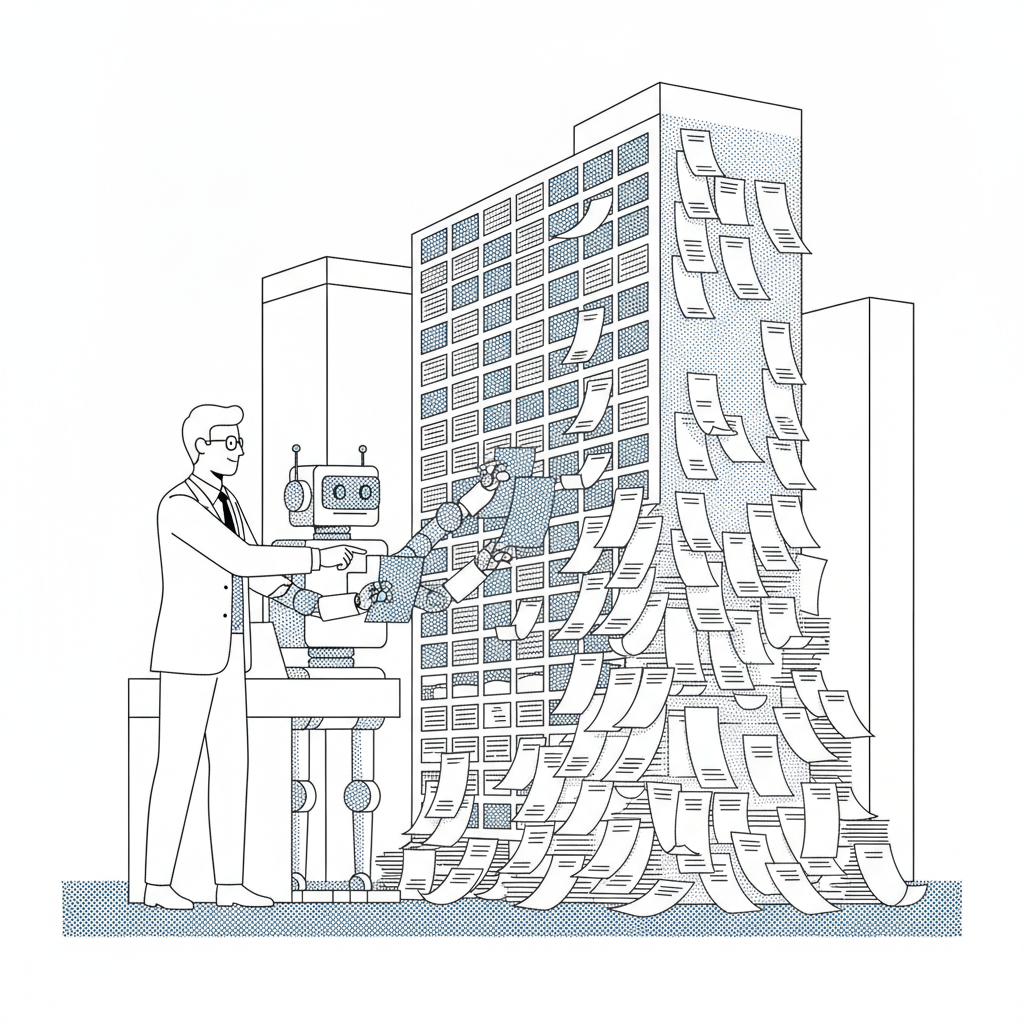
The headline writes itself: AI expands access to justice. Pro se filings averaged about 23,000 a year for nearly two decades. In FY2025 they hit 41,490, almost double the pre-AI mean. Pro se cases now account for 59% of the growth in civil filings, and roughly one in five complaints filed in early 2026 reads as AI-generated text.
The load it puts on the courts is what decides whether it actually means more justice.
Docket entries per court coming out of pro se cases are up 158% from the pre-AI baseline. Plaintiff pro se cases nearly doubled. Defendant pro se barely moved. In Vermont, USCIS mandamus filings went from about 45 a year to over 1,100, driven partly by a Reddit guide telling immigration applicants to draft a writ in Microsoft Copilot, pay a Fiverr lawyer $150 to clean it up, and file in the friendliest venue.
The capacity on the other side is fixed. Federal judges are capped by Congress. Magistrate triage was sized for a different volume. Institutional defendants (USCIS, agencies, civil rights respondents) cannot add lawyers the way litigants can add prompts.
Can justice survive?