Without observability, AI fails in silence
SaiKrishna Koorapati's piece in VentureBeat makes the case that observable AI isn't about adding monitoring dashboards. It's about audit trails that connect every AI decision back to its prompt, policy, and outcome
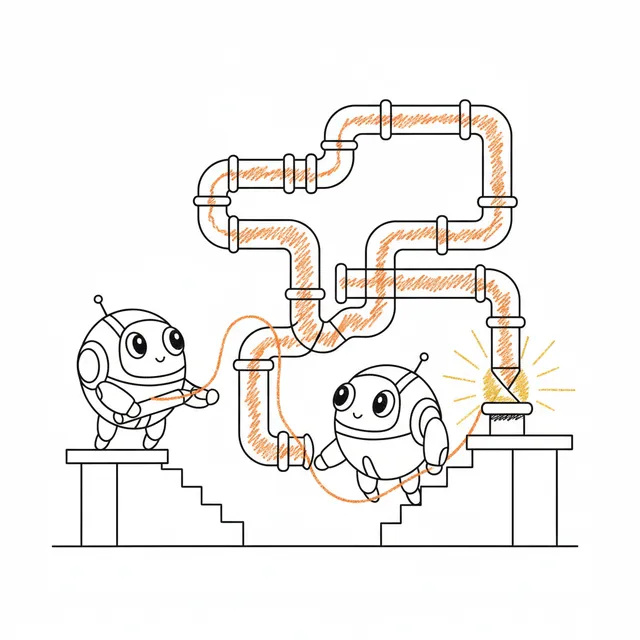
Many enterprises can show you when their AI broke. Almost none can tell you why.
A Fortune 100 bank learned this the hard way. Their LLM for loan classification looked great in testing — benchmark accuracy was strong. Six months into production, auditors discovered 18% of critical cases were silently misrouted. No alerts. No traces. No explanation.
The problem wasn't bias or bad data. It was invisible. Without observability, there's no accountability.
SaiKrishna Koorapati's piece in VentureBeat makes the case that observable AI isn't about adding monitoring dashboards. It's about audit trails that connect every AI decision back to its prompt, policy, and outcome. That distinction matters — and for legal and product teams, it solves a specific problem: proving your AI actually followed the rules.
The governance gap is plumbing, not policy
We've spent two years writing AI governance frameworks. Acceptable use policies. Risk taxonomies. Model cards. All necessary. But have we built organizations with beautiful governance documents and zero ability to trace a single AI decision from input to output?
That's the gap Koorapati identifies, and it maps directly to what legal and compliance teams face in practice. When a regulator asks "how did your system reach this decision?" — or when a customer challenges an outcome — you need more than a policy binder. You need a replayable chain of evidence: what prompt was used, what context was retrieved, what guardrails fired, what the output was, and whether a human reviewed it.
Without that chain, your governance framework is aspirational. With it, governance becomes operational.
The mechanism works like this: every AI interaction generates a trace ID. That ID connects the input (prompt + context), the processing (which policies fired, which filters triggered), and the output (what the model generated, whether a human reviewed it, what happened next). When something goes wrong — or when an auditor asks questions six months later — you can reconstruct the entire decision path.
Compare this to traditional software reliability engineering. When a web service fails, you don't just know it failed. You know which request triggered the failure, what data was involved, which dependencies were called, what errors were thrown, and where the system tried to recover. That's the discipline AI deployments need, but most don't have.
Three layers that make governance visible
Koorapati breaks down observable AI into three telemetry layers. Each layer serves a different governance function, and all three connect through that common trace ID.
First layer: prompts and context. This is your input audit trail. Every prompt template, every retrieved document, every model version, every redaction decision. When someone asks "what data did the AI see?" you can show them. When you need to understand why a particular output happened, you start here.
The practical implementation looks like this: version-controlled prompt registries, where every prompt change is tracked and timestamped. Context logging that captures what documents the system retrieved from your knowledge base. Model version tags that show which version of Claude or GPT processed the request. Redaction middleware that logs what PII was filtered before the prompt reached the model.
For product counsel, this layer answers the question "did we respect data boundaries?" An AI assistant that drafts customer support responses should only access the current customer's records, not the entire database. Without logging what context was retrieved, you can't prove you maintained that boundary.
Second layer: policies and controls. This is your governance layer made visible. Safety filter outcomes, PII detection triggers, citation checks, risk-tier classifications. Every control you documented in your AI governance framework needs telemetry that shows it actually ran.
The gap between documented controls and operating controls is where most organizations fail audits. Your policy says the system checks for hallucinations before surfacing medical advice. But can you show the audit log proving that check ran on every single output? Can you demonstrate that when the check failed, the output was blocked?
This layer captures:
- Which safety filters fired on a given request
- Whether PII detection flagged anything
- What confidence scores the model assigned
- Whether citation checks validated factual claims
- What risk tier the system assigned to the interaction
- Whether the output required human review based on your policies
When product teams tell me "we have guardrails in place," I ask for the logs. Show me the last 100 times the hallucination detector fired. Show me the distribution of confidence scores across your production traffic. Show me how often human review was triggered and how long reviews took. Without that data, guardrails are aspirational.
Third layer: outcomes and feedback. Did it work? Human ratings, edit distances, downstream business events like cases closed or documents approved, and the KPI deltas that tell you whether the system actually helps.
This is where observability transitions from compliance artifact to product intelligence. You're not just proving the system followed rules. You're measuring whether it delivered value.
The implementation requires instrumenting the feedback loop: when a human edits an AI-generated draft, log the edit distance. When a user rates an output, capture that signal. When the AI output leads to a downstream business event — a case closes, a document gets approved, a transaction completes — connect that outcome back to the original AI decision through the trace ID.
For legal teams advising on AI deployment, this layer answers the question "can we quantify the risks we're taking?" If 30% of AI outputs require substantial human editing, that's a signal about model reliability. If certain types of queries consistently result in low ratings, that's a signal about capability gaps. If downstream error rates spike after deploying a new model version, you need rollback procedures.
All three layers connect through that trace ID. That's what makes reconstruction possible. When the Fortune 100 bank discovered misrouted loans, they had no way to understand which prompts, which contexts, which model decisions led to the failures. They couldn't replay the decisions. They couldn't identify the pattern. They couldn't prevent recurrence. The trace ID is the thread that ties everything together.
Why six weeks matters more than six months
Koorapati outlines a two-sprint implementation — six weeks total — that gets organizations to functional observability:
Sprint 1 (weeks 1–3): Version-controlled prompt registry, redaction middleware, request/response logging with trace IDs, basic evaluations, and a simple human-in-the-loop interface.
Sprint 2 (weeks 4–6): Offline test sets from real examples, policy gates for factuality and safety, a lightweight SLO dashboard, and automated cost tracking.
That timeline matters because it changes the economic calculation. If observability requires six months of infrastructure work, teams skip it. If it takes six weeks, it becomes the foundation you build on rather than the retrofit you defer.
I've seen this pattern at multiple organizations. The teams that succeed treat observability as sprint zero work — the infrastructure you need before you start building features. The teams that struggle treat it as technical debt they'll address later. Later never comes, or it comes after an incident.
One Fortune 100 client that adopted this structure cut incident response time by 40% and — perhaps more telling — aligned product and compliance roadmaps for the first time. Product teams could show legal exactly which controls were running. Legal teams could verify those controls worked without halting deployments for manual reviews. The alignment came from shared visibility into the same data.
The six-week timeline also exposes a strategic choice: you're deciding whether to instrument as you build or reverse-engineer after deployment. The cost difference is roughly 10x. Building observability into the architecture from the start means your trace IDs, your logging, your control gates are native to the system. Retrofitting means unpacking production systems, adding instrumentation that wasn't designed in, and hoping you didn't miss critical decision points.
Where this breaks down in practice
Even with the right architecture, three failure modes undermine observability in AI deployments:
First: log volume without query capability. Teams capture everything but can't find anything. You have the trace IDs, you have the context logs, you have the policy outcomes — but when legal asks "show me all cases where the PII filter triggered in the last quarter," you can't answer because nobody built the query layer.
Observability requires not just capture but retrieval. That means structured logging with queryable fields. That means indexing on the dimensions legal and product teams actually care about: model version, policy outcomes, confidence scores, review flags. That means building dashboards that surface patterns, not just individual traces.
Second: instrumentation without interpretation. You have the data. You don't know what it means. Confidence scores from the model — but no baseline for what constitutes "low confidence" that requires review. Edit distances on human corrections — but no threshold for when corrections indicate systemic failure versus normal refinement.
This is where cross-functional alignment becomes essential. Engineering knows how to instrument. Legal knows what questions auditors ask. Product knows what outcomes matter for users. The interpretation layer requires all three perspectives. Without that synthesis, you end up with metrics nobody acts on.
Third: monitoring without response protocols. The system detects a problem. Nobody has authority to act. I've seen organizations with sophisticated observability that flags concerning patterns — but no defined owner for remediation, no escalation procedures, no criteria for rollback decisions.
Observability creates evidence. Evidence demands response. Response requires governance. If your observability architecture doesn't connect to clear decision rights and response protocols, you've built a witness to failure, not a mechanism for preventing it.
What legal and product teams should demand
If you're advising on AI deployment, observability isn't an engineering detail you can delegate. It's the foundation your governance framework operates on. You should be asking:
Can we replay any AI decision end-to-end? If the answer is no, your audit trail has a gap that no policy document can fill. The right answer looks like: "Yes, using the trace ID we can show you the exact prompt, the context that was retrieved, which controls fired, what the model output, whether a human reviewed it, and what action resulted."
Are evaluations continuous or one-time? Weekly scorecards shared across engineering, product, and risk teams turn compliance from a checkpoint into an operational rhythm. One-time evaluations tell you the system worked on launch day. Continuous evaluations tell you whether it still works six months later, after data drift, after model updates, after usage patterns evolve.
Where does human review trigger? Low-confidence outputs and policy-flagged responses should route to expert review — and every edit and override should be captured as both training data and audit evidence. The review protocol needs specificity: what confidence threshold triggers review? Who performs the review? What's the SLA? What happens to outputs pending review?
Is cost observable? LLM costs grow non-linearly with token consumption, context length, and model version. If you're not tracking tokens, latency, and throughput per feature, cost surprises will become budget crises that stall your AI program. I've seen AI features go from pilot to production and blow through quarterly budgets in weeks because nobody instrumented cost monitoring.
The organizations getting this right aren't the ones with the most sophisticated models. They're the ones that built observability into the architecture from day one — so when the regulator calls, or the board asks, or an auditor shows up, they have evidence instead of explanations.
Observability isn't a monitoring dashboard. It's the infrastructure layer that makes AI governance real. Koorapati's insight is that we already know how to build this for traditional software systems. Site reliability engineering solved distributed systems observability. AI deployments need the same discipline — structured telemetry, trace IDs connecting decisions, query layers that answer audit questions, and response protocols triggered by what the monitoring reveals.
The governance frameworks you wrote over the last two years aren't wrong. They just can't operate without the plumbing that makes policy verifiable. That plumbing is observability. Six weeks to build it. Six months of pain without it.
https://venturebeat.com/ai/why-observable-ai-is-the-missing-sre-layer-enterprises-need-for-reliable

