Where the duty attaches when the agent controls the loop
The bar rules don't bend because the work scaled.
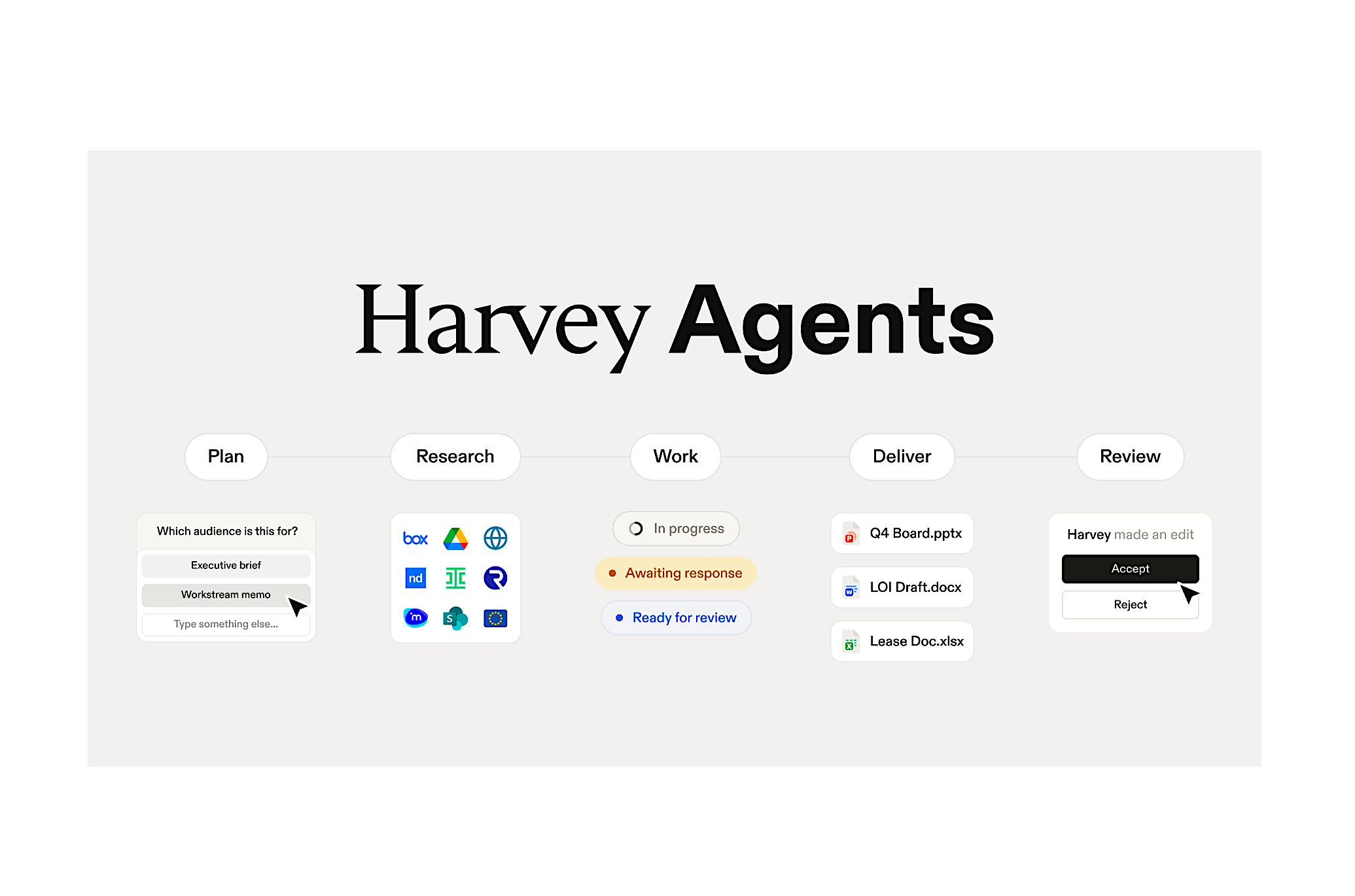
Ryan Samii's piece in Artificial Lawyer in April is the right frame for where legal work is going. Two layers of intelligence, systematic execution and complex reasoning, running together, with judgment as the orchestration layer. Agents are no longer following human-designed decision trees. They are controlling the loop themselves. They prompt themselves. They select approaches. They evaluate intermediate results. They iterate until the work meets the bar.
I want to take Samii's description of the new capability seriously and ask the question: when the agent makes the call, who owes the duty?
Inside the agent loop
Samii's description of agent work is simple enough: the agent prompts itself. It selects approaches. It evaluates intermediate results. It iterates until the work meets the bar.
Read at the granularity of a single matter, that sequence is dozens of small judgments. Which document is the most relevant precedent. Whether this clause variation is material. Whether the intermediate analysis is correct enough to keep going or needs to backtrack. Whether the output satisfies the lawyer's instructions in a way she would actually accept.
Most of those small judgments are decisions a lawyer would have made if the work had been done the old way. Some of them are decisions the lawyer technically could not have made, at volume no human can, but that the lawyer remains on the hook for.
That last point is the one the agent-product conversation is not yet treating as a design constraint.
The duty doesn't transfer to the agent
The bar rules don't bend because the work scaled. Competence, confidentiality, supervision of non-lawyer assistance, loyalty to the client — these are duties the lawyer owes, and they apply per matter, per client, per output, regardless of how the work got done. An agent navigating the loop on the lawyer's behalf does not assume those duties. The duties have nowhere to go. They stay with the lawyer.
But the lawyer didn't make most of the calls. The agent did. So where does the duty attach?
Each fiduciary duty has to attach to an artifact in the system — an attestation that lets the lawyer show she discharged it, generated as a byproduct of the agent's action rather than reconstructed after something went wrong.
How each duty attaches
Loyalty requires that work was done in the client's interest, not someone else's, within authority the client actually granted. When an agent controls the loop, loyalty depends on two things being captured at runtime: which human authorized this work, and what scope that authorization carried. The agent's tool access has to bind to that scope. The matter, the client, the privileged perimeter, the deal-specific limits — these are identity and authority primitives, not aspirations.
Care is a different shape. The duty asks whether the lawyer applied appropriate skill and judgment to the matter. When the agent navigates the loop, care lives in two artifacts: what the lawyer intended when she scoped the work, and what was done at each step. The duty is discharged not by a final output but by a path she can defend.
Confidentiality is the duty most directly threatened by agent architecture. Privileged information has to stay inside the boundary it was given to. When multiple agents touch the same matter, when tool access reaches into CRM, matter management, and communications at the same time, the boundary cannot be assumed. It has to be logged. Every crossing of a trust boundary — between systems, between actors, between matters — generates a record. Without that record, the lawyer cannot attest she preserved the privilege. With it, she can.
Supervision of non-lawyer assistance — which is what the bar calls the work an agent is doing — requires the lawyer to know what the agent did and why, and to be in a position to direct or correct it. At scale, supervision cannot mean "reviewed personally." It has to mean "can reconstruct on demand, against an attestation surface the bar would accept." That is a custody chain. Who held the data, who took the action, where it sat, how any of it is provable. Without custody, supervision is a verbal claim. With it, supervision is a defensible position.
What it takes to keep the gains
Samii is right that the pyramid reshapes and that judgment becomes the defining layer. The gains he describes — a partner's strategic framework deployed across a portfolio, institutional knowledge embedded in workflows rather than locked in individual heads, firms reaching matters the old staffing model could not support, depend on the architecture below the orchestration layer carrying its weight.
Fiduciary duty is not a constraint on agentic legal work. It is its design specification. Loyalty, care, confidentiality, supervision — each one has an architectural answer, and the answers stop being optional the moment the agent controls the loop. The firms that recognize this — that fiduciary duty is what an agent product team should be building toward, not something the general counsel drafts a memo about after launch — are the ones that get to keep the gains Samii's piece describes.
The orchestration layer is where the lawyer's judgment now lives. The duty layer is what makes that judgment defensible at scale. Samii named the capability shift. The architectural shift it requires lives in the layer below — and the duty stays the lawyer's, no matter how much of the loop the agent runs.
 artificiallawyer