The timeline compression that hit software development is here for legal work
AI generates contract provisions faster than you can review them. Creation isn't the bottleneck.
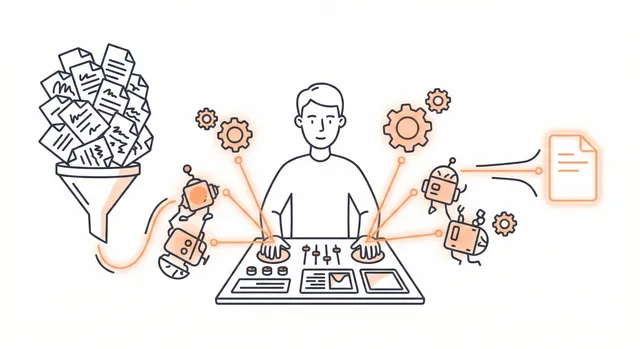
When I read Shashwat Abhattacharjee's piece on how Anthropic collapsed software timelines from months to days, I recognized the same shift happening in legal work right now. The bottleneck moved—and most legal teams haven't caught up yet.
The bottleneck shifted from creation to validation. AI generates contract provisions faster than you can review them. The constraint isn't drafting speed anymore—it's knowing which AI outputs to trust.
Anthropic built a complete software product in 10 days with two engineers orchestrating AI agents instead of writing code. The timeline collapsed from 3-6 months to 1.5 weeks. Contract negotiations are seeing the same compression—agreements that took three days to review are now done in three hours.
AI extracts indemnification language, flags playbook deviations, and checks liability caps against playbooks. I spend my time on the two provisions that need actual negotiation because they create risk gaps that the AI can't assess.
The mechanism is identical to software. Developers stopped writing code and started orchestrating AI agents. In-house counsel stopped drafting provisions and started orchestrating AI contract analysis. Both produce 10-20x speed increases when you know which judgment calls can't be automated.
Anthropic's head of Claude Code runs 3-8 AI instances in parallel, each handling different subsystems. Soon, in-house counsel will build the same workflows. One AI flags non-standard provisions, another checks playbook terms, a third generates redlines. The lawyer decides which outputs matter for this specific deal.
Software development solved validation with a layered review: primary AI generates code, secondary AI reviews it, and a human validates. Contract work will the same structure. One AI drafts provisions from your playbook, another checks regulatory requirements, and a third flags risk tolerance deviations. You make the final call on which risks to accept.
The economics mirror software. A senior lawyer at $400/hour spends 40 hours negotiating a vendor contract: $16,000. Orchestrating AI analysis: 4 hours at $1,600 plus API costs under $100. The 90% cost reduction only happens if you know which 4 hours of judgment can't be automated.
It's reasonable to assume that the tools will work when lawyers who've negotiated 50+ SaaS agreements know exactly which provisions break in practice. The tools will fail when you try to automate an analysis you haven't done enough times to recognize the edge cases.
Meta pursued a $2 billion acquisition for AI agent capability. Anthropic built equivalent functionality in 10 days. Soon, for in-house legal teams: your need isn't the most lawyers or best templates. It's lawyers who orchestrate AI workflows that compress negotiation timelines while catching the risks that matter.
When compilers automated assembly language, assembly expertise stopped commanding a premium. The same shift is one layer up now. The specialized knowledge being automated isn't just text production—it's routine contract analysis.
What stays valuable is the filter between "legally defensible contract language" and "provisions that work for our risk tolerance and business model." That filter requires having negotiated enough deals to know which theoretical risks show up in real disputes.
In-house teams restructuring around orchestration operate at 10-20x the speed of teams treating AI as a research tool. The work that consumed our time—drafting liability provisions, researching indemnification precedent, extracting payment terms—AI handles for standard scenarios. What it can't do is know when the standard scenario doesn't apply.
Your legal team either restructures around orchestrating AI for agreements or explains to the business why contract reviews still take three days when other departments moved to three hours six months ago.
#LegalTech #AIGovernance #ProductCounsel #InHouseCounsel #LegalInnovation #LegalOperations

