Taste and judgement are a harness away
Is the distance between taste in design and judgment in law just a better harness away — or is it a better model?
Six days apart, Anthropic shipped two products.
Claude for Word arrived on April 11 — Claude embedded in the document lawyers already work in, producing tracked changes from prompts. An obvious step forward. Before it, February's Claude Legal Plugin had already established itself: slash commands, a local playbook file, MCP connectors running inside Cowork, outside the document. A bit crude. Incomplete. Anthropic's own product page tells lawyers not to use it for high-stakes or regulated work.
Is it great? No. Is it the floor Anthropic will build every future legal offering on? Yes.
On April 17, the same company shipped Claude Design. An onboarding step that works in code to read visuals and a design system so the next session inherits taste instead of re-explaining it. Inline comments on specific elements. Adjustment knobs for domain parameters. A handoff bundle that ships finished work as structured provenance rather than copy-paste.
Critics called Claude Design a Figma competitor. Probably not. That is a distraction for clicks.
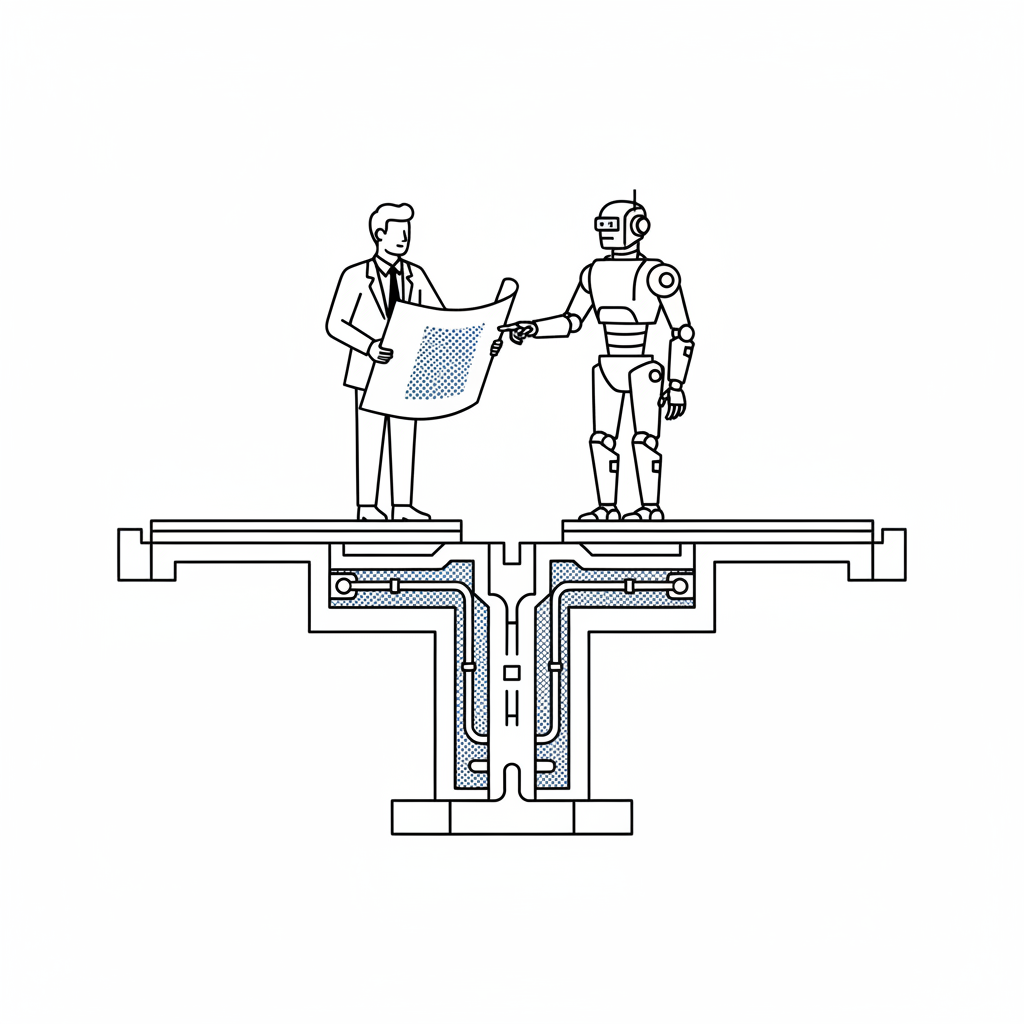
What Anthropic actually did was use code as a harness for taste. They did not make everyone a designer. They built a scaffold where taste — the accumulated judgment of what looks right, what reads right, what belongs — can be expressed in code.
Anthropic's bet: the model is fine, the workflow is broken — wrap it in a harness that lets the practitioner's tacit knowledge express itself.
Which opens the question for legal: whether the distance between taste in design and judgment in law is a better harness away, or whether some part of legal judgment cannot live in a harness at all.
What Claude Design actually scaffolded
Designers don't have taste because they can describe it. They have taste because they have seen thousands of comps and know which one is wrong in three seconds without being able to articulate why for thirty minutes. Taste is tacit. It is pattern recognition across a corpus the designer has internalized. Explaining it to a chatbot in prose has always been the wrong shape for expressing it.
Claude Design scaffolded taste with four primitives:
- Pre-loaded context on onboarding — the harness reads the codebase and design files and builds the team's system, so the designer no longer describes the brand every session. The brand becomes the container.
- The canvas as the artifact — taste happens on the artifact, not adjacent to it. The designer clicks and moves and nudges — the same gestures taste takes in practice.
- Direct manipulation primitives — inline comments on specific elements, adjustment knobs for spacing, color, density. Taste expressed through fingers, not sentences.
- The handoff bundle — the finished artifact transfers intent and structure to Claude Code as a package. Taste becomes execution.
None of these primitives taught Claude taste. They gave the designer's taste a tool to express itself in, and gave the model enough structure to stop hallucinating in domains where the designer knew better.
Is Claude Design great? No. But it might be the floor for a harness that holds tacit knowledge.
What judgment in legal practice actually is
Lawyers talk about judgment as if it were a different category than taste. It may not be. Judgment is tacit pattern recognition across a corpus of matters, clients, counterparties, jurisdictions, risk tolerances, and prior positions — internalized by practice, expressed in instinct, articulated only when forced. A senior lawyer reads an indemnity clause and knows it is wrong in two seconds. Explaining why takes twenty minutes, and the explanation is always a reconstruction, not the actual process. And like taste, it is awkward to express to a chat interface.
The provocative claim: judgment, like taste, can live in code. The harder question is what shape the harness has to take to hold it.
The harness for law cannot just be Claude Design with a thesaurus swap.
Start with the feedback loop. A designer sees a bad design in three seconds, which is why the canvas works as a training surface — the signal is fast, local, and unambiguous. A legal harness can only partially replicate that. A redlining agent that watches what the lawyer accepts and rejects can keep the playbook in sync with actual deals. The loop that closes is between codified guidance and practiced judgment. But there is another loop of judgment that lives outside the agreement.
A clause gets accepted or pushed based on how strategic the customer relationship is, where the account sits in the company's priorities this quarter, what commitments were made in the last QBR, and what the account team promised to close the renewal. That reasoning lives in Slack threads, email chains, SFDC notes, Jira, Confluence, and conversations that were never written down at all. The redline records the accumulated judgment of all that context, but the agent watching the redline only sees the output.
This is why the focus in legal tech right now is about pulling context closer to the agreement — integrations that put CRM, communications, and risk data on the same surface as the draft. Design does not face this problem, because the canvas contains the context. Legal is the opposite: the document is only part of what produced it, and the harness can only learn from what it can see. Everything that lives in the other surfaces stays outside the loop.
That makes integration the central engineering problem. A harness that cannot reach into CRM, matter history, and communications sees only the output of the lawyer's judgment, not the inputs. Most of those systems are gated, governed, and bound by attorney-client privilege. The integration problem is not a side quest. It is the harness.
Then there is the adversary. Design has none. A button is not negotiated against an opposing party also running an AI. Legal work increasingly is, against counsel with their own harness. Two-sided taste is not a thing in design. In law it is the whole work. The knobs have to include "how hard will they push" alongside "how hard do I push" — and a harness that verifies its own composition has no analogue for verifying against a counterparty that is verifying back.
A bad design costs a redesign. A bad clause can cost a lawsuit, a client, a firm, or a career. The audit trail is not compliance theater. It is the substrate that lets a lawyer defend the work when it is challenged, which it will be. Claude Design can ship as a research preview. A legal harness cannot.
Which gets to the license. Designers are not governed by bar rules. Lawyers are. Competence, confidentiality, supervision of non-lawyer assistance. Every one of those duties has an architectural answer: tenancy for confidentiality, audit trail for supervision, provenance for competence. Anthropic's own plugin disclaimer — don't use for high-stakes or regulated work — is not a verdict on the model. It is an admission the plugin does not yet have the right requirements.
The differences are not reasons the harness cannot exist. They are the requirements it has to meet.
Judgment has a shape
The distance between Claude for Word and Claude Design is the distance between a plugin and a harness that holds tacit knowledge. The legal field has a clear architectural target — a scaffold built to hold the things that actually make legal judgment legal.
The harness answer for law: a scaffold that pre-loads the firm's playbook and the deal's context, presents the agreement as the canvas, gives the lawyer direct manipulation over clauses, and ships a handoff bundle with provenance the bar can defend. The judgment lives in the structure the lawyer shapes around the model.
The harness has a failure mode: what it cannot see. So much of legal judgment lives in conversations that were never written down, in calls that have no transcript, in side channels that never reach a system of record. The harness is only as good as the surfaces it integrates — which is why integration is not a feature of the harness. It is the harness.
So the real question is not whether judgment can live in code. It is which parts of judgment the harness can actually hold — and which parts have to stay in the lawyer.
What lawyers call judgment and what designers call taste are probably closer than we think. They are probably not identical. The differences are real, and the architecture for legal will have to respect them. But if they are closer than we think, then the gap between Claude Design and a real Claude for Legal is not a question of capability. It is a question of whether the field — the firms deploying it, the counsel designing around it — continues to describe legal judgment as categorically unteachable, or becomes curious about what taste-as-code looks like inside a regulated discipline.
Anthropic scaffolded taste. The next move belongs to whoever — Anthropic, Harvey, Docusign, Microsoft, or the counsel who finally names the pattern — figures out what a harness for legal judgment actually has to hold. And which parts of judgment will not be handed off at all.