From execution engine to gatekeeper: backends in the age of agents
Backends are retreating to governance roles while AI agents become the execution layer. InfoQ's analysis shows this architectural shift is already happening in production at banks, healthcare systems, and call centers—with major implications for legal teams.

A South American bank processes payments through WhatsApp. JPMorgan handles call center queries with AI agents. Mass General Brigham automatically drafts clinical notes for 800 physicians. These are now fully operational production systems rather than pilots, with AI agents seamlessly managing entire workflows on their own, eliminating the need for human intervention.
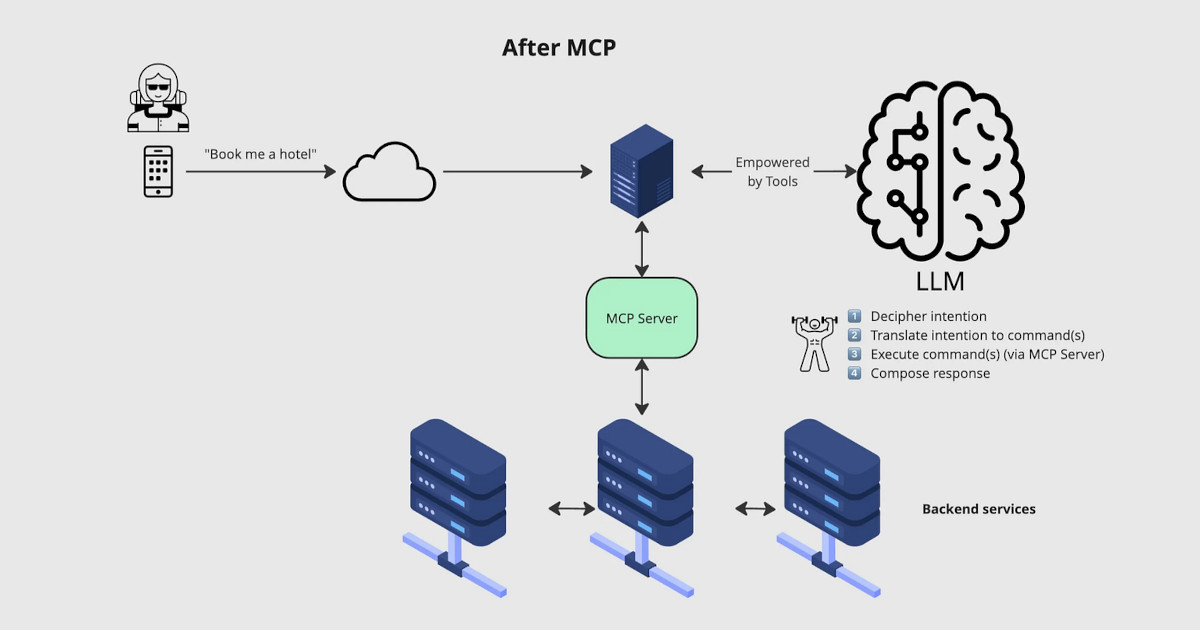
Here's what changed: In the past, traditional architectures relied on backends to interpret intent and coordinate API calls, making the system more interconnected and responsive. Now agents do that work themselves through protocols like MCP. The backend becomes a gatekeeper, not an executor. Which means your governance architecture needs to work at the speed of autonomous decisions, not batch compliance reviews.
This connects to the evaluation infrastructure problem I wrote about earlier. You can't test autonomous execution with static unit tests. InfoQ's three-tier framework gets this right: trust and transparency come first, workflow automation second, autonomy third. Organizations that invert this order fail because they're asking "can we?" before answering "should we?"
For legal and product teams, the implication is clear: Your compliance stack was designed for software that waits for permission. Agentic systems don't wait.
That's not a technical problem you can solve with better logging. It's an architecture decision about where accountability lives when your agents are the operational layer.
 Eran Stiller