Five predictions for AI in 2026
AI moved from tool to actor. 2026 is when we build the accountability structures those actors require.
I spent the last week of 2025 looking at what we learned this year and where the gaps are widening. Five developments are coming in 2026—not because I'm guessing, but because the pressure points are already visible.
The shift continues: Autonomous systems need autonomous governance
We crossed the threshold in 2025 where AI moved from tool to actor. 2026 is when we build the accountability structures those actors require. The question isn't whether agents will act autonomously—they already do. The question is whether organizations will build governance that matches how these systems actually work.
Legal personas become the new identity layer
AI agents are booking travel, executing purchases, and negotiating contracts. The liability question—who's responsible when an agent acts—gets answered in 2026 with legal personas. These aren't user profiles. They're authorization frameworks that define who an agent acts on behalf of, what permissions it has, and which contractual commitments and IP protections govern its actions.
Think of it as agent-specific power of attorney. When your AI assistant books a flight, it's acting under a defined legal persona with specific authority limits. When something goes wrong, the liability firewall is already built. The companies that implement this in 2026 won't spend 2027 in remediation.
Security becomes "Know Your Agent"
Non-human identities already outnumber humans 80 to 1 in most organizations. Security teams are still treating them like enhanced user accounts. That ends in 2026. We'll see specialized authentication layers using OAuth 2.0 standards and short-lived tokens designed specifically for agents, not retrofitted from human security protocols.
This isn't theoretical. Agents have broad permissions and static credentials without the onboarding or offboarding protocols we apply to human employees. They're high-risk service accounts masquerading as helpful assistants. The breach reports in late 2025 made this clear. 2026 is when security architecture catches up.
Memory portability becomes a regulatory flashpoint
Your AI agent knows your preferences, your history, your decision patterns. That's what makes it valuable. That's also what creates extreme vendor lock-in. Switching platforms means lobotomizing your digital executive assistant.
Regulators see this coming. 2026 is when we'll see the first pushes for memory portability standards—frameworks that let users transfer their "identity memory" between platforms. The companies building this capability now will have a competitive advantage. The ones waiting for mandates will be scrambling.
Testing becomes continuous observability
You can't test an autonomous agent the way you test a function. Their behavior is non-deterministic. You can't predict every decision pathway in a 30-step workflow. So testing shifts from pre-deployment gates to permanent architecture.
The standard emerging in 2026: agentic swarm auditing. Specialized agents monitoring other agents for data fabrication, undeclared data sourcing, boundary violations. Using the MELT framework—Metrics, Events, Logs, and Traces—to reconstruct decision pathways in real-time. This isn't oversight. It's how autonomous systems operate safely at scale.
What connects these predictions
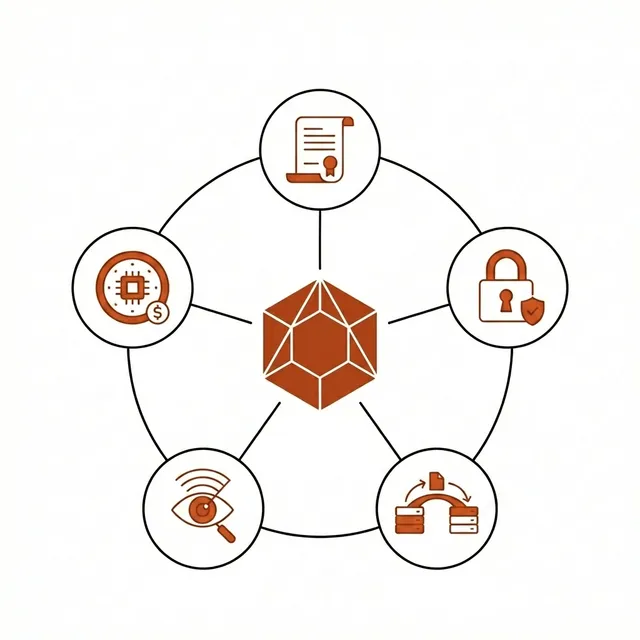
None of these developments exists in isolation. Legal personas define the authority that security protocols must enforce. Memory portability depends on identity frameworks that verification systems must audit. Payment rails require both legal authorization and security authentication. And continuous observability watches all of it.
We're building an accountability architecture for autonomous systems. The companies that recognize this as a connected system—not five separate initiatives—will deploy faster and govern better.
The question for your team
Which of these are you designing for now, and which are you planning to retrofit? Because the pattern from 2025 is clear: building governance into architecture from the start costs a fraction of adding it after deployment. Your agents are already acting autonomously. The question is whether your governance can keep up.
This is issue-spotting and strategic analysis, not legal advice for your specific situation.
#AIGovernance #ProductCounsel #TrustInfrastructure #LegalStrategy #EmergingTech #ResponsibleAI

