Beyond the chatbox: Designing interfaces for AI delegation
Conversational interfaces break down when AI handles complex workflows and governance requirements. Deploying autonomous systems requires new interface patterns for transparency, control, and human oversight
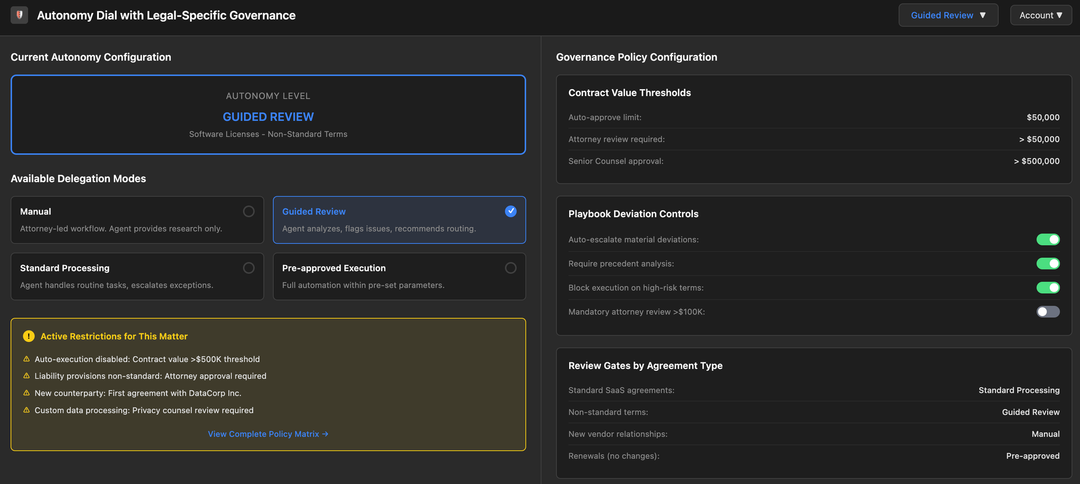
The chatbox has had a good run. It works well for answering questions, getting information, researching, and having back-and-forth exchanges where each interaction stands mostly on its own. But ask it to handle a multi-step workflow with dozens of moving parts, coordinate tool use across integrated systems, and operate under strict governance requirements? The interface breaks down fast. As AI agents move from responding to questions to executing complex delegated work, different interface patterns may be needed—ones that could make autonomous operations transparent, give users granular control over what agents can do, and embed human oversight where it matters most. This isn't necessarily about adding a few new buttons to the chatbox. It's about rethinking how software can present control, build trust, and handle accountability as machines start making decisions with real consequences.
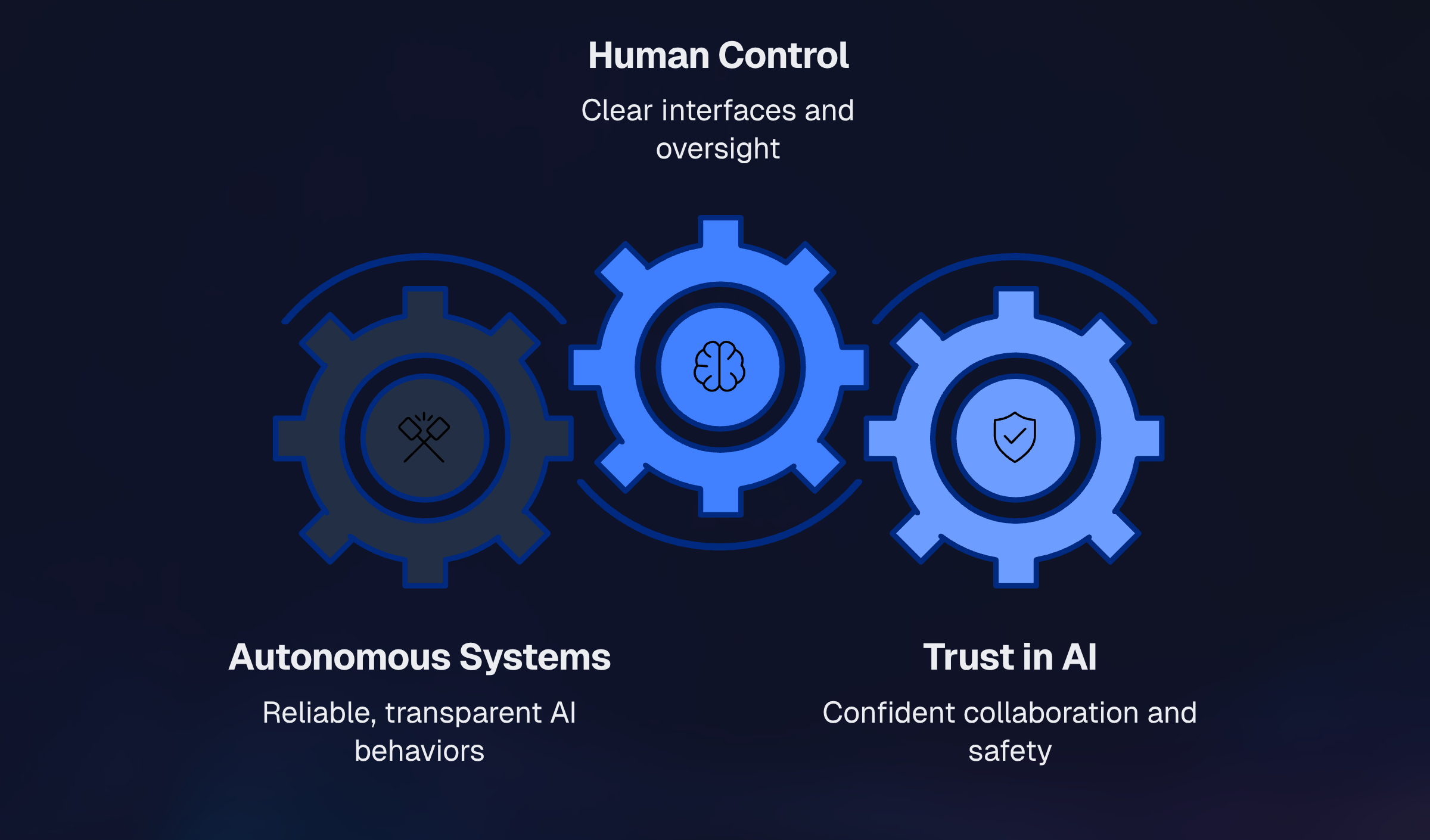
In practice, this could mean UI components such as autonomy dials to adjust how much initiative the agent takes, reasoning panels that display decision logic, and governor patterns that require human verification before high-stakes actions.
Why conversational interfaces have limits
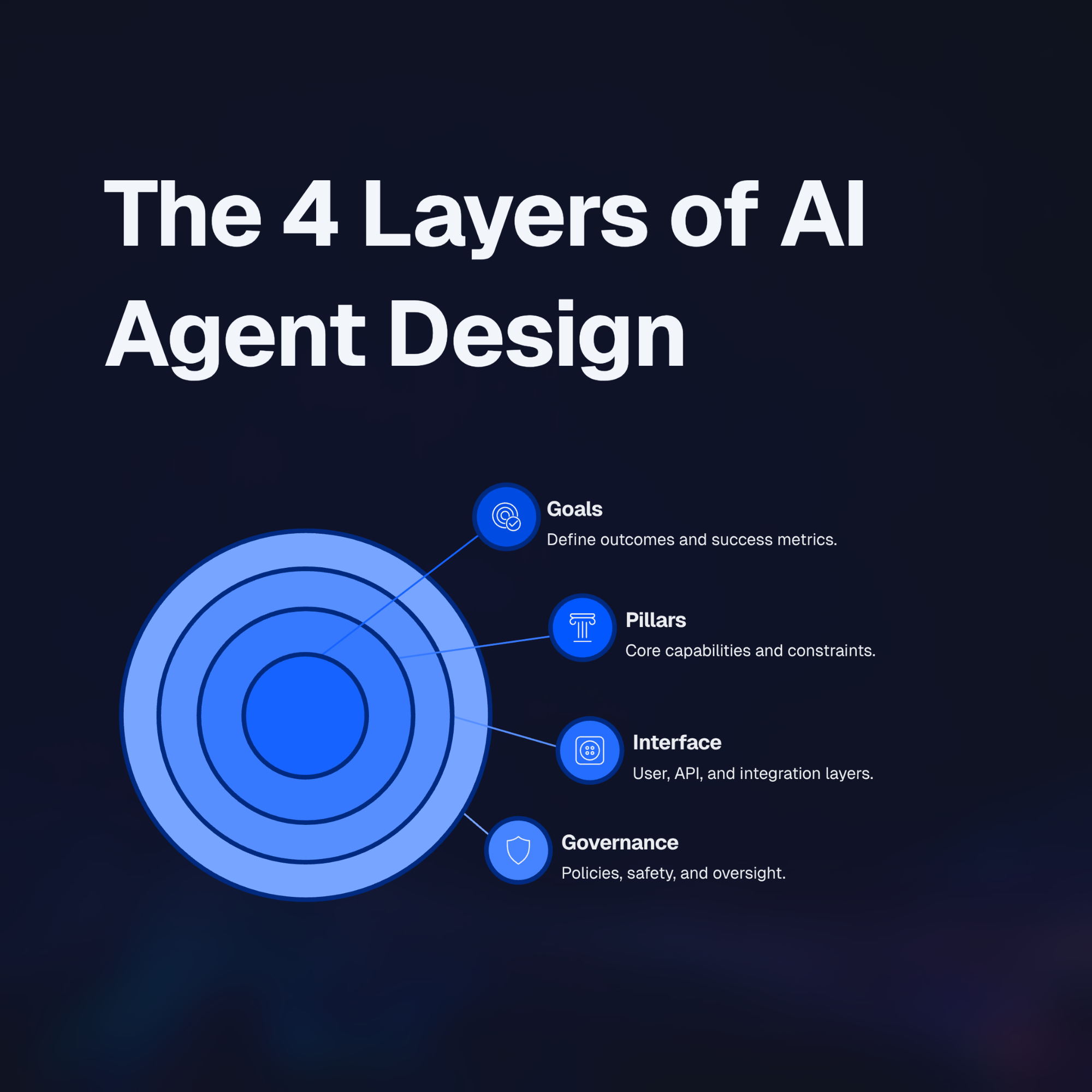
Chatbox interfaces succeed when tasks map to straightforward exchanges with predictable results. The design assumes each turn stands alone, with little need to track dependencies across multiple steps or coordinate parallel operations. This breaks down when autonomous agents handle complex workflows spanning dozens of operations, coordinate various tools, and surface intermediate failures for human review. The chatbox gives you no way to display an agent's active plan, show which sub-tasks succeeded or failed, or intervene at specific decision points. When an agent hits a planning failure—like generating code based on wrong assumptions about a data schema, or adding redundant steps because of context window limits—the linear text feed offers no good way to diagnose which reasoning step failed or provide guidance without starting over.
Conversational UI is designed for human efficiency in manual tasks, measuring success by reducing clicks and search time. Agentic systems might need to optimize delegation efficiency, with the interface helping supervisors audit and intervene in automated work. This could mean new metrics focused on time-to-audit rather than time-to-completion, and surfacing agent decision logic rather than hiding complexity. The chatbox design language—built for reactive assistance—has no way to express autonomous initiative, provisional actions waiting for approval, or hierarchical goal decomposition with traceable dependencies.
Goal-oriented architecture as the foundation
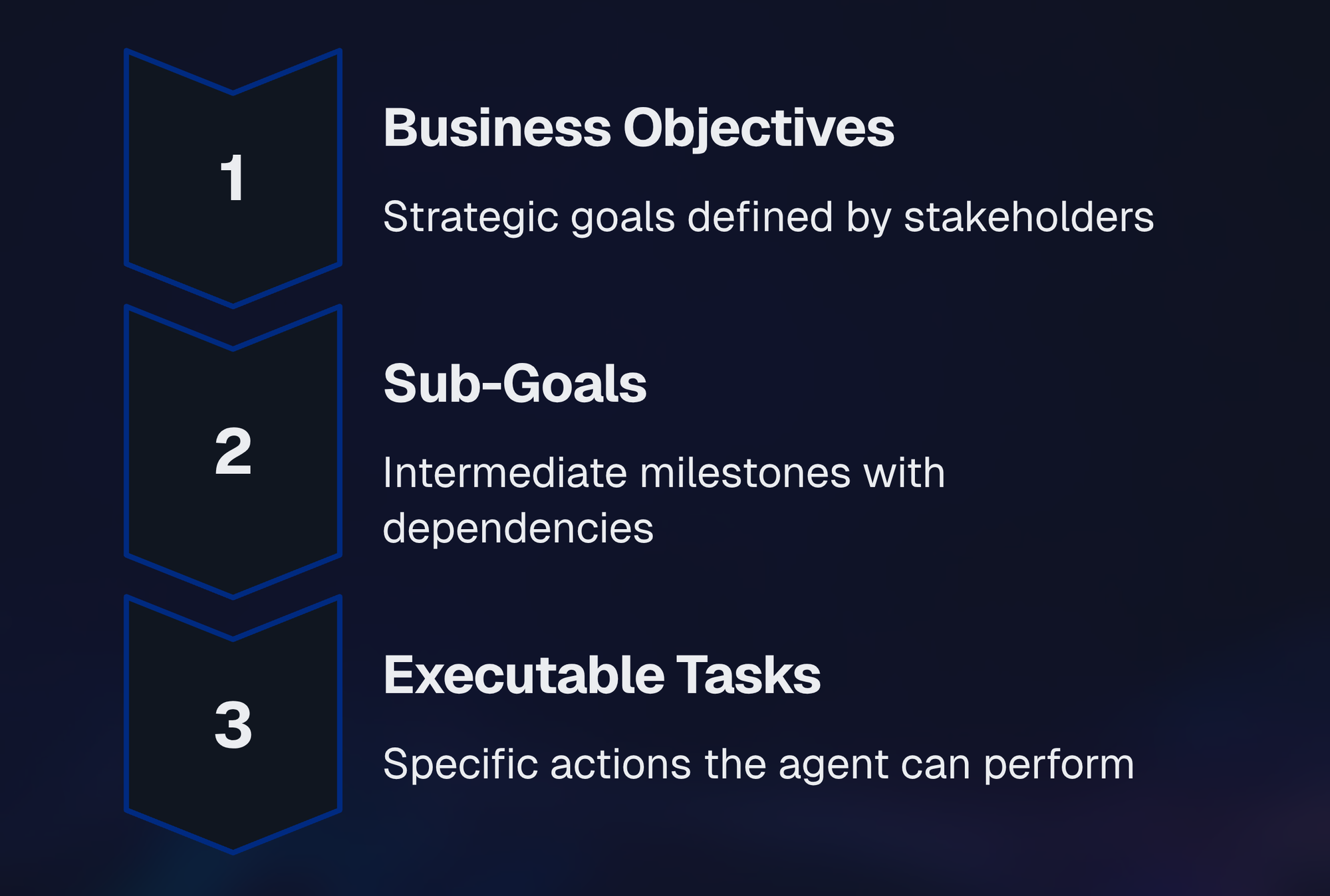
Goal-oriented architecture (GOA) could give agentic interfaces the structure they might need to make autonomous operations transparent and accountable. GOA starts with high-level business objectives, then breaks them down systematically into traceable sub-goals and executable tasks. This creates an explicit hierarchy mapping each action back to user intent. When an agent executes a specific operation—like querying a database or calling an external API—the interface could show not just what happened but which sub-goal the agent was pursuing and how that connects to the original objective. The architecture would establish end-to-end traceability that lets auditors reconstruct the complete decision chain from business goal through intermediate reasoning to specific execution steps.
In practice, GOA design might produce an interface organized around goal dashboards rather than conversation threads. Instead of scrolling through message history, users could see a hierarchical display showing the top-level objective, constituent sub-goals, current task status, and completion indicators for finished branches. This would give immediate visibility into which parts of a workflow succeeded, failed, or are still running, without parsing conversational context. The architecture could also enable modular intervention where users can pause execution at specific sub-goal boundaries, provide corrective guidance for a failed branch, and resume execution without losing context for unaffected workflow segments.
Transparency patterns that expose reasoning
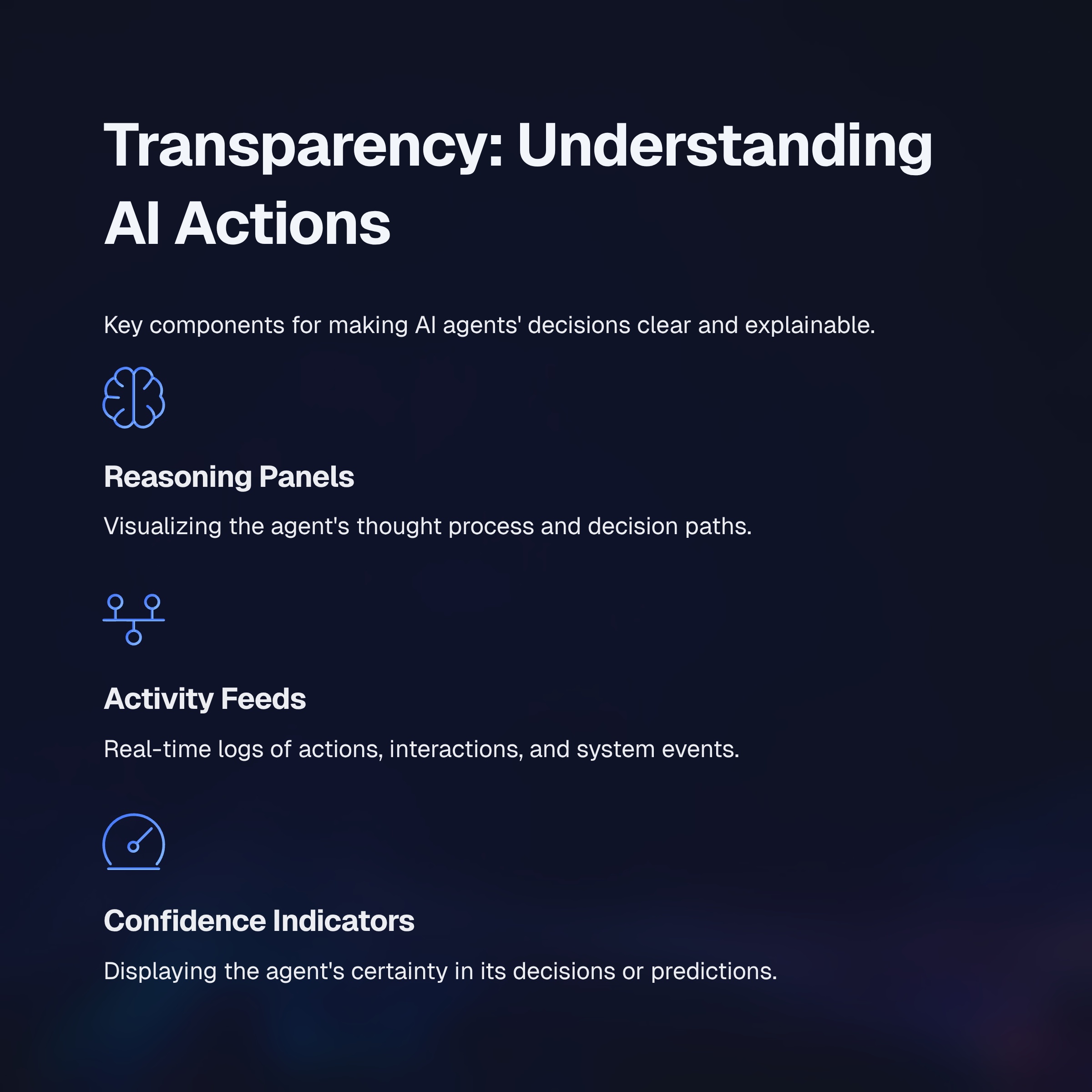
Making an agent's internal decision process visible might require moving beyond generic status messages to structured displays that document reasoning, confidence levels, and proposed actions before execution. Activity feeds could show chronological timelines of what each agent did, why it took that action, and what it plans next, turning the opaque "processing" state into a readable operational narrative. Reasoning panels might display the logic chain the agent followed to reach a decision, including which data sources it consulted, what alternatives it considered, and which business rules or constraints shaped its choice. These panels could let supervisors trace back through the agent's thinking and identify where incorrect assumptions entered the workflow.
Confidence indicators might signal the agent's self-assessed certainty about specific decisions through visual cues like color coding or explicit percentage scores. When confidence drops below defined thresholds—because the agent encountered ambiguous data, conflicting constraints, or a scenario outside its training—the interface could automatically surface the reasoning panel and pause execution pending human review. This would implement efficient transparency where routine high-confidence operations proceed autonomously with minimal visibility, while uncertain decisions trigger explicit oversight without requiring constant monitoring.
The distinction between proposing and presuming actions could establish trust through interface behavior. High-trust interfaces might display proposed actions with explicit approval options before execution, particularly for irreversible operations like submitting financial transactions or deleting data. The pattern would turn autonomous capability into a collaborative partnership by providing users with clear decision points to review the agent's plan, approve it with modifications, or take over execution manually. This could resolve the tension between operational fluency and auditability by allowing high autonomy for routine operations while inserting mandatory review gates at high-stakes decision points.
Governance patterns that establish human oversight
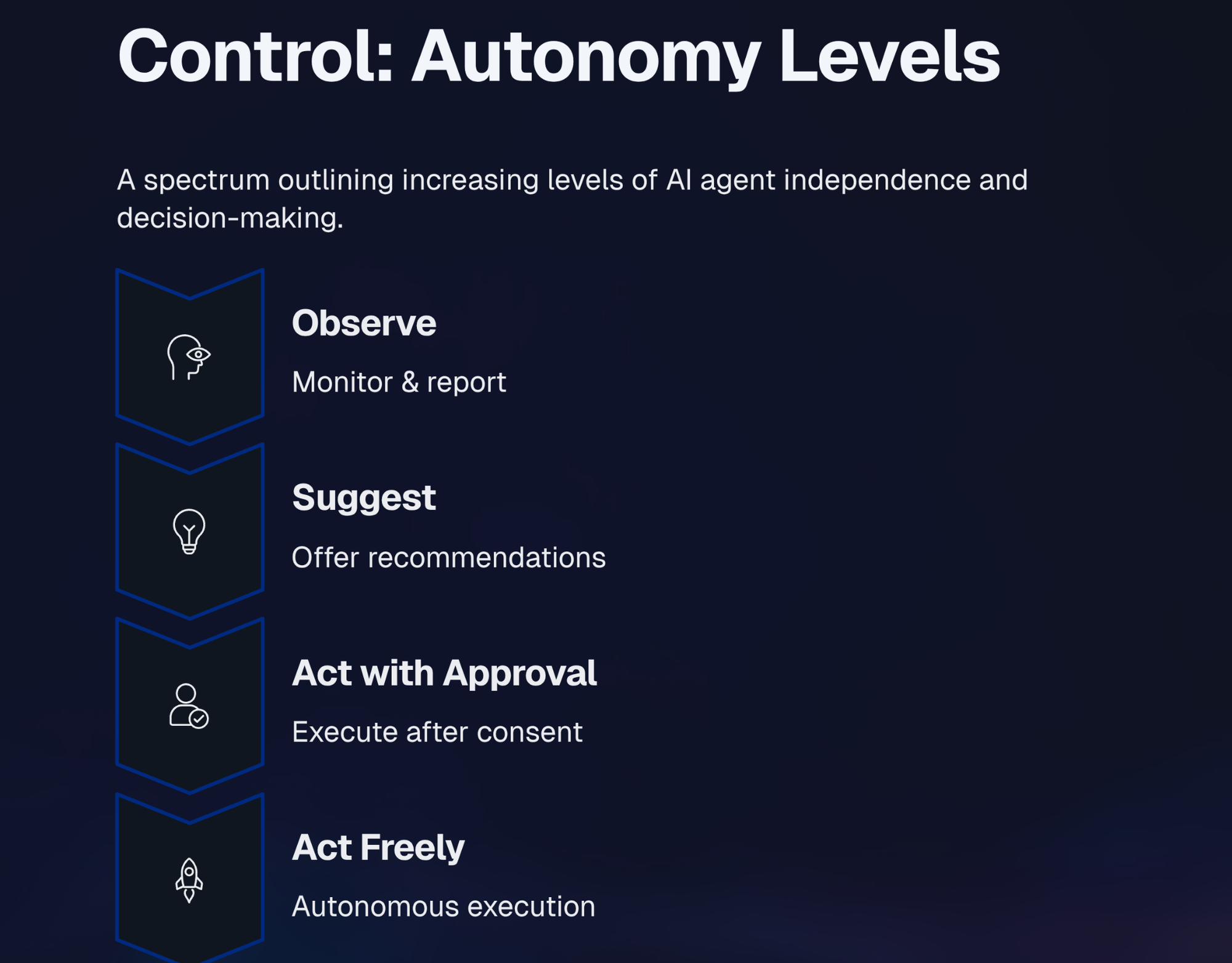
The autonomy dial could provide granular control over agent initiative through an interface element that adjusts the spectrum from passive observation to unrestricted autonomous action. The control might present as a slider or mode selector with distinct states: Observe (the agent monitors but takes no action), Suggest (the agent proposes actions for human approval), Act with approval (the agent executes after showing its plan), and Act freely (the agent operates autonomously within defined boundaries). Organizations could set different autonomy levels for different task types, user roles, or data sensitivity categories, creating governance policies that balance automation efficiency against control requirements.
Reliable interrupt mechanisms might matter here. Users delegating work to autonomous agents may need to trust that they can stop, pause, or reverse agent actions without data loss or workflow corruption. The interface could include prominent Stop, Pause, and Undo affordances positioned consistently across all agent interactions. The Pause function might pause agent execution while preserving the entire workflow state, allowing users to inspect intermediate results, adjust parameters, or provide corrective guidance before resuming. The Undo capability could handle not only simple data changes but also complex multi-step operations that may have triggered cascading effects across integrated systems, requiring sophisticated rollback logic to maintain system consistency.
Review-before-apply gates might insert explicit human checkpoints before agents finalize changes to production systems. The pattern could show up as a confirmation interface displaying the agent's proposed modifications with side-by-side comparison to current state, explicit approval controls, and an option to edit before applying. For financial operations, this might display "Auto-resolving 3 items… [Pause] [View changes]" giving users immediate control before transaction execution. The governance pattern acknowledges that autonomous capability doesn't require autonomous execution for high-stakes operations, embedding human judgment at necessary decision boundaries.
New visual patterns for delegation
Dynamic blocks might transform agent output from linear text to adaptive modular components that populate and transform based on real-time analysis of user needs and underlying context. In enterprise applications handling complex structured data, the AI could analyze documents or database results and automatically organize information into visual blocks arranged according to domain-specific frameworks. This might let users immediately see the AI's understanding, identify missing information, and navigate to specific data elements without parsing through conversational summaries. The blocks could work as interactive elements where users can expand for detail, flag for revision, or approve for downstream processing.
Governor patterns might embed verification requirements directly into information design through visual attributes that convey data confidence and verification status. One potential implementation could display AI-generated provisional content at reduced opacity—typically 70%—signaling unverified machine-generated status. When users review and approve the content, the block might transition to full opacity and display a verification indicator. This subtle visual signal could turn governance from an external compliance requirement into an intuitive element of the interface, making the verification state immediately apparent without requiring explicit status labels or separate approval workflows.
Milestone markers could provide non-linear guidance for exploratory workflows where rigid step-by-step processes would be inappropriate. These markers might visually highlight gaps in documentation or workflow completion and suggest specific next steps without enforcing a predetermined sequence. In legal document review workflows, milestone markers might flag missing contract clauses, incomplete approval chains, or unresolved redline conflicts while letting users address issues in whatever order matches their priorities. The pattern recognizes that complex professional workflows rarely follow linear paths and could provide structure without imposing artificial rigidity.
Explainable AI integration as compliance infrastructure
The National Institute of Standards and Technology identifies four principles for explainable AI that could translate into interface requirements for enterprise agent systems. Explanation might require that AI output always includes clear reasoning, typically through feature importance analysis presented visually or natural language descriptions of decision logic. Explanations could be tailored to the user's role and expertise, providing technical detail for developers while offering business-impact summaries for executives. Accuracy might demand that explanations be verifiable and accurately reflect the underlying decision mechanisms rather than generating plausible but incorrect rationalizations. Limits could require the system to communicate where it performs well and explicitly delineate operational boundaries and potential failure modes.
XAI success in enterprise applications might be measured by persuasiveness—whether users find the explanation convincing—and efficiency—whether the explanation accelerates rather than impedes decision-making. Trust in autonomous systems may correlate directly with explanation effectiveness, potentially making XAI necessary infrastructure for agent adoption rather than a nice-to-have feature. The interface requirement might be that explanations be proactive rather than reactive, surfacing before users need to ask and appearing automatically when agent confidence drops or when approaching high-stakes decision points.
The accountability pillar of XAI could align with the traceability inherent in goal-oriented architecture. If an agent takes an erroneous action, the interface might enable tracing the decision backwards through the complete operational chain, showing what features influenced the decision, which sub-goal the agent was pursuing, and why that sub-goal was prioritized over alternatives. This granular audit trail may be necessary for risk mitigation and regulatory compliance, particularly in regulated industries where demonstrating decision rationale is mandatory.
Rollout planning for legal and compliance review gates
For legal teams establishing governance frameworks for autonomous agent deployment, the immediate focus might be defining escalation criteria that trigger mandatory human review before agent execution. These criteria could map to data sensitivity classifications, action irreversibility thresholds, and regulatory compliance boundaries. The interface might implement hard stops where agents cannot proceed without explicit legal sign-off—before executing contractual commitments, making public disclosures, or processing protected categories of personal data. The mechanism could involve configuration interfaces where legal teams specify review gates using business logic rules that evaluate proposed agent actions against organizational policies. Documentation might include the complete decision matrix showing which action types trigger which review levels, including the responsible reviewers and maximum approval timeframes.
The verification infrastructure might require audit logs that capture the agent's actions, its reasoning process, confidence levels, and the human approval chain for gated operations. Implementation could involve structured logging that records the complete goal-oriented architecture hierarchy showing how each executed task mapped to sub-goals and top-level objectives, the data sources the agent consulted, the alternatives it considered, and the constraints that shaped its decision. These logs may need to be tamper-evident and retain sufficient granularity to reconstruct the decision process during regulatory audits or internal investigations. Organizations might establish retention policies that balance investigative needs against storage constraints, typically requiring detailed logs for high-risk operations and summary logs for routine automation.
Feature requirements for product teams building agent interfaces
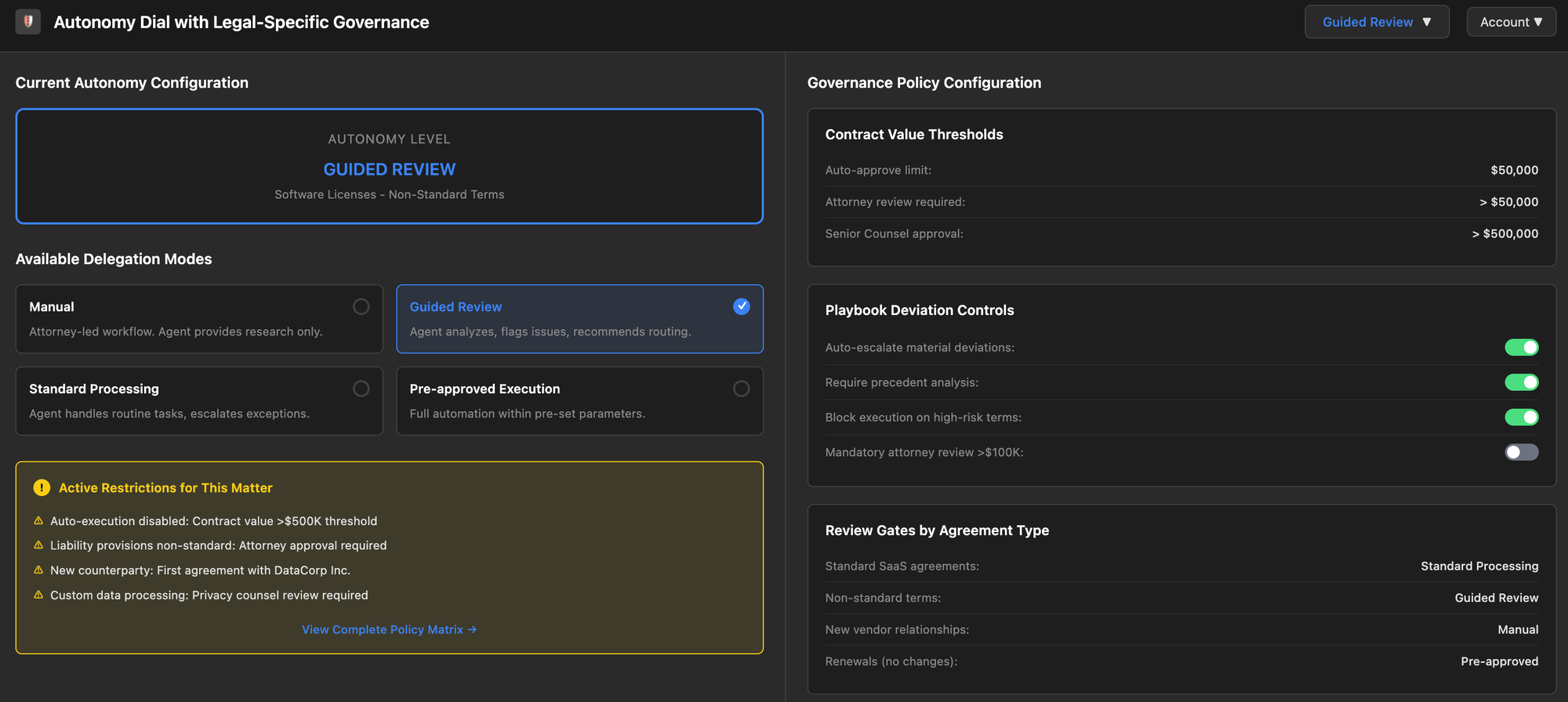
For product teams implementing agent delegation capabilities, the main deliverable might shift from screen-by-screen mockups to end-to-end workflow blueprints that document the complete goal decomposition, agent responsibilities at each stage, and intervention points where humans maintain control. These blueprints could specify the autonomy dial settings for each workflow segment, showing where the agent operates in Observe mode during initial rollout, progresses to Suggest mode after validation, and potentially advances to Act-with-approval mode for mature workflows. Documentation might include the specific conditions that would trigger autonomy level adjustments, such as error rates exceeding thresholds or user satisfaction scores dropping below baselines.
Implementation could involve reasoning panel infrastructure that captures and displays agent decision logic in real-time rather than reconstructing it after the fact. This might require instrumenting the agent's planning and execution layers to emit structured reasoning traces that the interface can consume and format for user presentation. The technical architecture could support pause-and-inspect workflows where users can freeze agent execution, drill into the reasoning panel for specific decisions, provide corrective guidance, and resume execution without losing workflow state. Teams might build confidence scoring into the agent's decision engine and surface these scores through visual indicators that let users quickly identify uncertain operations requiring review.
The dynamic block architecture might involve defining domain-specific frameworks that organize agent output into structured, interactive components appropriate for your application context. For contract management systems, this could mean blocks organized around contract metadata, key terms, obligation timelines, and risk indicators. For financial analysis workflows, blocks might represent different analytical dimensions including trend analysis, peer comparisons, and scenario projections. Design considerations could include the block interaction model including expand-for-detail behaviors, edit-in-place capabilities, and approval workflows that transition blocks from provisional to verified status.
Near-term deployment versus emerging research
The patterns described above—goal-oriented architecture, autonomy dials, reasoning panels, dynamic blocks, and XAI integration—represent deployable capabilities that may be available in current enterprise software platforms. Leading contract management systems, customer service platforms, and development tools are implementing these patterns in production. The timeline for enterprise adoption might span 12-24 months for organizations with mature AI practices and 24-36 months for those building foundational capabilities.
Multimodal interfaces combining voice, gesture, and spatial computing remain largely in research and specialized application phases. While voice interfaces are becoming common for simple commands, the complex multimodal coordination that might be required for professional workflows—where users simultaneously speak, gesture, and manipulate visual interfaces—isn't yet reliable enough for enterprise deployment. Spatial computing applications including augmented reality overlays and gesture-based document review face adoption barriers including hardware requirements, user training overhead, and integration complexity with existing enterprise systems. Brain-computer interfaces and ambient computing that operates without explicit user interaction represent longer-term research directions unlikely to see enterprise deployment within the next five years.
The focus for enterprise software might be on the governance and transparency infrastructure that could enable safe agent delegation, rather than interface modalities that remain unproven in professional contexts. Organizations succeeding with agent adoption may be those embedding control mechanisms, audit trails, and human oversight into their architecture from the start, instead of chasing emerging interface paradigms that lack established design patterns and integration frameworks.
Workflow redesign as the prerequisite for agent value
The main obstacle to agent adoption isn't technical capability—it's process inertia. Organizations that bolt agent capabilities onto existing workflows, letting AI fill in forms faster or search documents more quickly, capture minimal value, and frequently face user resistance because the AI doesn't change how work gets done. Getting real productivity gains from autonomous agents might require redesigning workflows with the explicit assumption that agent capabilities are available, shifting human effort from routine execution to strategic oversight and exception handling.
This redesign could show up in practical workflow changes like moving contract review from attorney-drafted-and-approved to agent-drafted-and-attorney-approved, where attorneys focus on ambiguous clauses and business judgment rather than routine boilerplate generation. It might mean transitioning from humans conducting financial analysis with AI assistance to agents conducting analysis with human verification, where analysts spend their time questioning assumptions and exploring alternative scenarios rather than calculating ratios and formatting reports. The interface becomes how humans might delegate entire workflows and supervise execution rather than a tool for accelerating manual tasks.
Building toward supervised autonomous operations
The interface patterns emerging for agentic systems may represent a major evolution from command-and-control tools to delegation-and-supervision environments. The shift could involve explicit architectural decisions including adopting goal-oriented decomposition for traceability, implementing autonomy dials for granular control, building reasoning panels for transparency, deploying governor patterns for verification, and integrating XAI capabilities for accountability. These might not be optional enhancements—they could be necessary for enterprise software that will deploy autonomous agents in production environments where errors carry financial, legal, and reputational consequences.
The organizations succeeding with agent adoption may be those treating interface design as an architectural discipline rather than a visual exercise, focusing on building systems that could support reliable delegation under explicit governance constraints. The competitive advantage might go to enterprises that master the balance between automated efficiency and human oversight, implementing interfaces that make agent operations transparent, controllable, and trustworthy enough to handle important business processes.
The following papers were reviewed as part of drafting this article:
References
Glassman, E. L., Gu, Z., & Kummerfeld, J. K. (2024). AI-Resilient Interfaces. arXiv preprint arXiv:2405.08447. https://arxiv.org/abs/2405.08447
Muehlhaus, M., & Steimle, J. (2024). Interaction Design with Generative AI: An Empirical Study of Emerging Strategies Across the Four Phases of Design. arXiv preprint arXiv:2411.02662. https://arxiv.org/abs/2411.02662
Natta, P. K. (2025). Generative AI in enterprise systems: Moving beyond conversational AI. World Journal of Advanced Engineering Technology and Sciences, 15(1), 1695-1701. https://doi.org/10.30574/wjaets.2025.15.1.0408
Radanliev, P., & De Roure, D. (2023). Review of the state of the art in autonomous artificial intelligence. AI and Ethics, 3(2), 497-504. https://doi.org/10.1007/s43681-022-00176-2
Weisz, J. D., He, J., Muller, M. J., Hoefer, G., Miles, R., & Geyer, W. (2024). Design Principles for Generative AI Applications. arXiv preprint arXiv:2401.14484. https://arxiv.org/abs/2401.14484